

Focus is not a personality trait. It is a skill built from dozens of small decisions made throughout the day, most of which happen below the level of conscious attention. The person who can concentrate for three hours straight did not wake up with a magical attention span. They trained it, usually through tiny, repeatable habits that stack over time.
A 2023 study from the American Psychological Association found that the average adult attention span during work tasks has dropped to approximately 47 seconds before switching to a new activity. That number is sobering, but it also means the bar for improvement is low. Small gains compound quickly.
- James Clear, author of Atomic Habits, built his entire framework on the principle that 1% improvements, repeated daily, produce remarkable results over time.
- BJ Fogg, a behavioral scientist at Stanford, adds the practical layer: the habits most likely to stick are those that feel almost too small to matter. The shared insight is that focus is a system, not a heroic act of willpower. The tradeoff is patience. Micro-habits do not produce dramatic overnight transformations. They produce gradual, durable change that is visible only in retrospect.
1. Write your top priority on a sticky note before opening your laptop
Before your screen lights up and the notifications start, take 10 seconds to write the single most important task of the day on a physical sticky note and place it where you can see it. This primes your brain for intentionality instead of reactivity. The tactile act of writing reinforces the commitment in a way that typing does not.
Cognitive priming research shows that the first input of a work session disproportionately influences the direction of the next two hours. If your first input is your own priority, your morning tilts toward execution. If your first input is an email notification, your morning tilts toward reaction. Ten seconds change the trajectory.
2. Close your email tab after each processing session
When you finish processing an email, close the tab completely. Not minimize. Close. The visible tab, even in the background, acts as a persistent attention grabber, fragmenting your focus on the current task. Reopening it later requires an intentional decision, which is exactly the friction you want.
Research from Carnegie Mellon’s Human-Computer Interaction Institute found that even passive awareness of unread email reduces performance on primary tasks by up to 20%. The close action takes one second. The cognitive benefit lasts until you deliberately choose to reopen it. Tiny cost, meaningful return.
3. Take three deep breaths before starting any focus block
When your calendar focus block begins, pause for three slow breaths before touching the keyboard. This brief physiological reset activates the parasympathetic nervous system and downregulates the stress hormones that accumulate during task switching. It is the simplest on-ramp to concentration.
The neuroscience is straightforward. Shallow breathing keeps you in a sympathetic (fight-or-flight) state that is useful for scanning threats but terrible for sustained thinking. Three deep breaths shift you toward a parasympathetic (rest-and-digest) state optimized for complex cognition.
- Andrew Huberman, a neuroscientist at Stanford, has described this as a ‘physiological sigh’ and considers it one of the fastest tools for state regulation.
Put your phone face down and in a different room during deep work
Not on silent. Not flipped over on your desk. In a different room. A study from the University of Texas at Austin found that the mere presence of a smartphone, even when turned off, reduces available cognitive capacity. The phone does not need to buzz to distract you. Your brain spends processing power resisting the urge to check it.
This habit feels extreme until you try it. Most people discover that the anxiety of being separated from their phone fades after about 10 minutes. What replaces it is a clarity that is difficult to achieve any other way. If you genuinely need your phone for two-factor authentication or a specific app, put it in a drawer face down. The physical barrier makes the difference.
Drink a full glass of water at the start of every work session
Dehydration impairs cognitive function before you notice the thirst. A study from the University of Connecticut found that even mild dehydration (1 to 2% body water loss) produces measurable declines in concentration and working memory. Starting each work session with a full glass is a two-second habit that removes a physiological barrier to focus.
The habit also serves as a transition ritual. Filling the glass, carrying it to your desk, and drinking it creates a brief, repeatable sequence that signals to your brain: we are starting now. Over time, the water itself becomes a focus cue, much like athletes who have a pre-performance routine that shifts them into competitive mode.
Use the ‘two-minute rule’ to clear small tasks before deep work
Before entering a focus block, scan your task list for anything that takes under two minutes: a quick reply, a file rename, a task status update. Knock them out in a batch. This clears the ‘open loops’ that would otherwise intrude on your concentration as nagging background thoughts.
David Allen calls these open loops ‘incomplete agreements with yourself,’ and they consume disproportionate mental bandwidth relative to their actual effort. A five-minute clearing pass before deep work is like stretching before exercise. It prepares the system for sustained effort. Calendar.com’s task integration can help you surface quick tasks that are due today, so the clearing pass is fast and complete.
Set a single-purpose browser window for each work session
Open a new browser window with only the tabs you need for the current task. Close everything else. One window, one purpose. This prevents the tab-switching habit that pulls you from a document to Twitter to a news article to Slack in a 90-second loop that feels harmless but destroys concentration.
Tab proliferation is the modern equivalent of a cluttered desk. Each open tab represents an unfinished thought, an alternate task, or a potential distraction. By constraining your browser to a single-purpose window, you reduce visual noise and remove the triggers that initiate switching. Browser extensions like OneTab or Session Buddy can save your tabs for later without keeping them visible.
End every focus block by writing one sentence about what you accomplished
When your timer goes off, type one sentence: ‘Finished the first draft of the pricing section’ or ‘Fixed the API bug in the user auth flow.’ This 10-second habit creates a breadcrumb trail of progress that makes it easier to resume the task later and provides a small dopamine hit of completion, reinforcing the focus habit.
The sentence also serves as diagnostic data. If your end-of-block sentence is frequently ‘Made some progress on the doc,’ your focus blocks might not be specific enough. Compare that to ‘Wrote 500 words of the competitive analysis section.’ Specificity in the output sentence reflects specificity in the focus session. Track these sentences in a running log and review them weekly to see patterns in your most productive blocks.
Wear the same thing during focus hours (or a variation of it)
This sounds trivial, but decision fatigue is real. By reducing the cognitive load of choosing what to wear, you preserve a small but meaningful amount of mental energy for the work that matters. Steve Jobs, Mark Zuckerberg, and Barack Obama all adopted simplified wardrobes for exactly this reason. You do not need to wear the same outfit every day. A consistent ‘focus mode’ outfit or accessory (a specific hoodie, a pair of headphones) can serve as a physical cue that shifts your mindset into work mode.
The mechanism is classical conditioning. When you consistently pair a specific physical cue with a specific mental state, the cue automatically triggers that state. Over weeks of pairing your favorite headphones with deep work sessions, simply putting them on begins the transition into focus before you have done anything else.
Schedule your hardest cognitive task during your biological peak
Most people’s analytical thinking peaks in the late morning, roughly 10 AM to noon, for typical chronotypes. Schedule your most demanding focus work during this window and move administrative tasks to the post-lunch dip. This is not about working harder. It is about working in alignment with your body’s natural cognitive rhythm.
Daniel Pink dedicated an entire book, When, to the science of timing. His research synthesized dozens of studies showing that cognitive performance varies by as much as 20% depending on the time of day. Misallocating your peak to email processing is like using premium fuel to idle in a parking lot. Match the task to the time, and the same effort produces noticeably better output.
Batch all notifications into three daily review windows
Turn off all non-essential push notifications on your phone and computer. Batch them into three review windows: mid-morning, after lunch, and the end of the day. Most notifications are informational, not urgent. Reviewing them in batches costs nothing in responsiveness but saves enormous amounts of attention.
A study from Duke University found that the average smartphone user receives 63 notifications per day. Each one triggers a micro-interruption that takes 60 to 90 seconds to recover from, even if you do not act on it. That is potentially 90 minutes of daily recovery time from notifications alone. Batching them into windows gives you that time back while keeping you informed at reasonable intervals.
Use a single notebook for all capture throughout the day
Keep one notebook (physical or digital) where every stray thought, idea, and to-do gets captured during the day. Not a separate app for notes, tasks, and ideas. One place. The cognitive cost of deciding where to put something is often higher than the cost of just writing it down. When everything goes to one place, capture becomes frictionless.
Tiago Forte calls this the ‘inbox’ stage of his Building a Second Brain methodology. The key is that you process the notebook during your weekly review, not as you write. During the workday, the notebook is for capture only. This separation of capture from processing means your focus blocks stay unbroken while nothing important slips through the cracks.
Stand up and stretch for 30 seconds every 45 minutes
Set a gentle recurring timer for 45 minutes. When it sounds, stand up, stretch your shoulders and back, and sit back down. The entire interruption takes 30 seconds. This micro-break prevents the physical tension that accumulates during seated focus work and actually extends the quality of your attention.
Research from the Draugiem Group using productivity-tracking software found that the highest-performing workers worked in 52-minute focused sprints, followed by 17-minute breaks. You do not need 17 minutes. But 30 seconds of physical movement at the 45-minute mark prevents the stiffness and restlessness that causes most people to reach for their phone as an escape from discomfort.
Say ‘not now’ instead of ‘no’ to internal interruptions
When a colleague taps you during focus time (physically or digitally), respond with ‘I am in the middle of something. Can I come to you at [specific time]?’ This is warmer than ‘no’ and more effective than ‘I am busy’ because it offers a concrete alternative. Most people are happy to wait when they know exactly when they will get your attention.
The specific time element is critical. ‘Later’ is vague and generates follow-up. ‘At 2 PM’ is precise and generates patience. This reframing preserves your focus block while maintaining the relationship, which matters in collaborative environments where protecting your time cannot come at the cost of alienating your team.
Review your focus habits for five minutes every Sunday evening
Spend five minutes on Sunday evening asking: which micro-habits did I actually do this week? Which ones did I skip? Is there one I should drop and one I should add? This brief review prevents the slow decay that kills most habit systems. It is not a planning session. It is a maintenance check, the equivalent of glancing at your dashboard lights before a long drive.
Habits degrade without feedback loops. The Sunday review is the lightest possible feedback loop: five minutes, no journaling required, just an honest mental scan. James Clear writes that habits do not fail because people lack motivation. They fail because people lack a system for noticing when the habit has stopped. A five-minute weekly check is that system.
The Bottom Line
You will not adopt all 15 habits at once, and you should not try. Pick two that feel almost too simple to matter. Practice them for two weeks. When they become automatic, add a third. The magic of micro-habits is that each one is small enough to survive a bad day, and together they build the focus that most people assume requires superhuman discipline. It does not. It just requires the right 10-second decisions, made consistently.
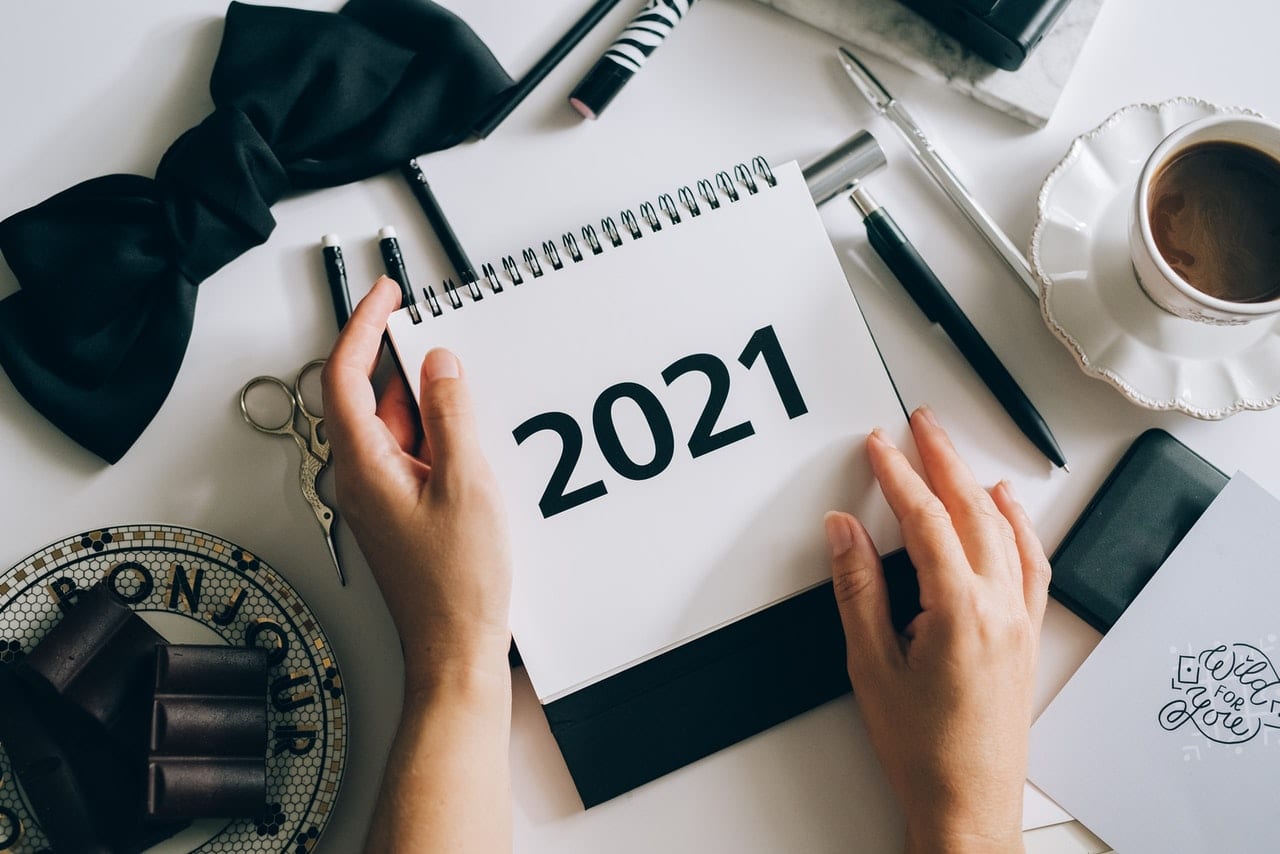
Image Credit: Photo by Ksenia Chernaya: Pexels


Deanna Ritchie
Editor-in-Chief at Calendar. Former Editor-in-Chief, ReadWrite, Editor-in-Chief and writer at Startup Grind. Freelance editor at Entrepreneur.com. Deanna loves to help build startups, and guide them to discover the business value of their online content and social media marketing.