


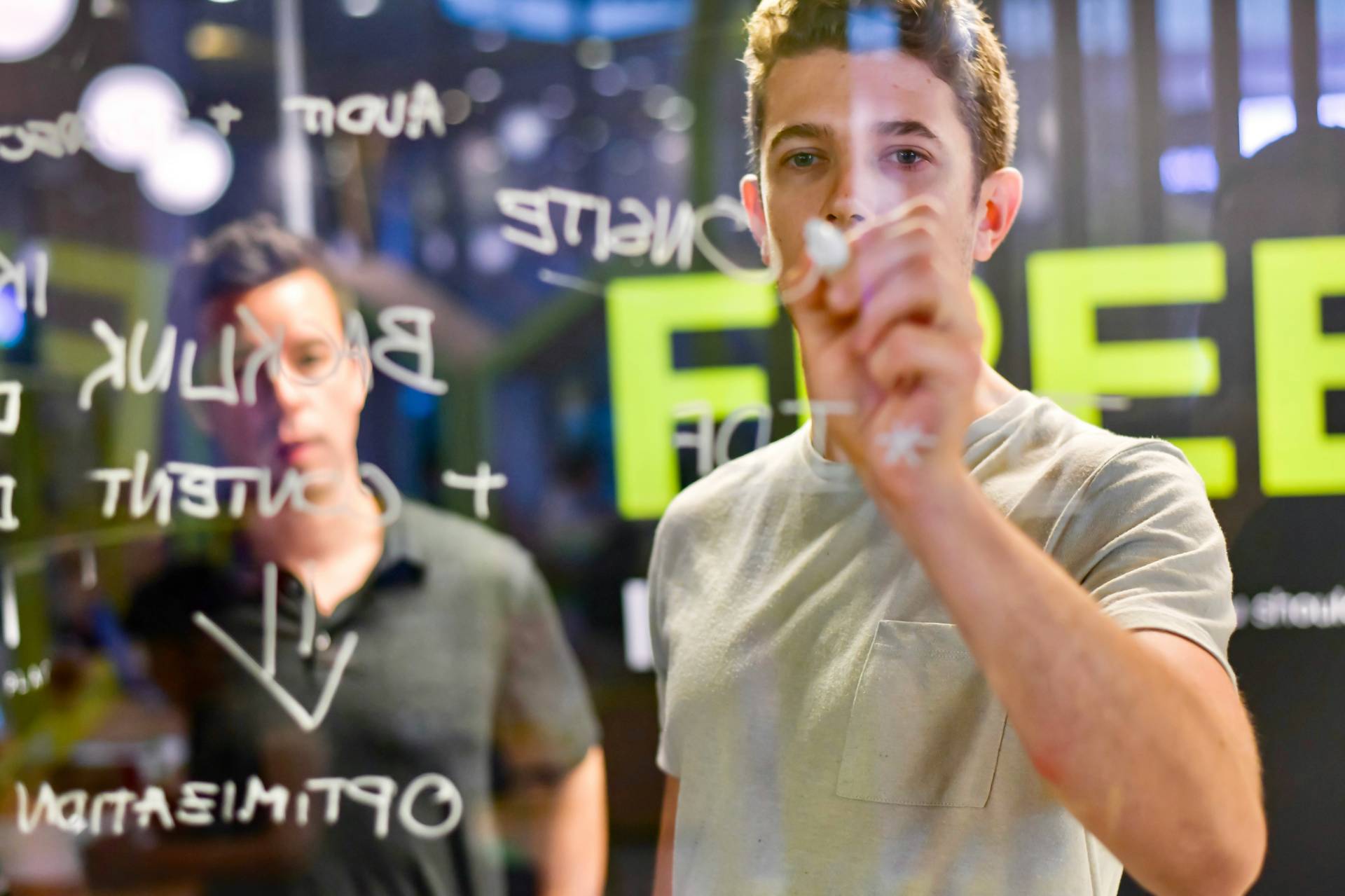
Customers are used to scrolling TikTok and seeing ads. But they’re not so familiar with brands’ mascots crashing concerts or seeing/scanning street posters and then immediately experiencing an augmented reality experience on their phone. But today, companies are experimenting with guerrilla marketing like this. Introducing an element of surprise into their advertising campaigns shocks consumers out of their stable apathy.
What’s more, due to technological changes, things are evolving rapidly in 2025 and into 2026. Hyper-viral digital tactics combined with integrated AI are leading to greater audience engagement, despite consumer skepticism, and higher productivity.
Guerrilla Marketing as a Shortcut Through Consumer Distraction
What’s interesting about guerrilla tactics as well is how much they can cost. They can reduce marketing costs. Once companies put these tactics in place, they can usually slash marketing costs by around 90% while outperforming conventional approaches. That means that if companies get this type of marketing right, they can often reduce advertising costs and outcompete their competitors.
“Guerrilla marketing was a term first coined in the 1980s,” says Excite OOH, a company that offers TfL advertising opportunities. “It was all about focusing on low-budget opportunities that would have a big impact on consumer psychology. Many firms try different gimmicks to attract new prospects and generate leads. Now, though, it has become essential for a lot of small brands.”
From Early Guerrilla Tactics to More Efficient Hybrid Campaigns
Examples of guerrilla marketing from the early days included things like flash mobs and ambient placements. BIC had posted an ad of giant razors mowing lawns, which immediately captured public attention. However, after 2020 and the pandemic, and due to online ad saturation, many more companies were pushed into guerrilla territory. Now, many firms use hybrid guerrilla integration to get their messages in front of consumers.
Why Physical Guerrilla Marketing Saves Time and Cuts Through Noise
In-person physical guerrilla marketing is essential because:
- So many consumers now have short attention spans
- A lot of people are using ad blockers, which completely undermines the ads in the first place
When companies generate authentic surprise, it has a far more profound psychological impact than any slick marketing campaign. Consumers really want to feel the sense of shock when companies do something memorable; they don’t necessarily want polished corporate ads.
AI-Driven Automation and Real-Time Campaign Adaptation
In 2025, AI-driven personalization and prediction are enabling real-time ad adaptation. For example, brands are using artificial intelligence to generate content and adapt their campaigns to user requirements in real-time. For example, Coca-Cola recently created some controversy by using predictive analytics to time some of its stunts. While this led to an overall improvement in the company’s performance, it also upset some consumers who worried they were being monitored.
Overall, for companies like Coca-Cola, Heinz, and BIC, engagement is significantly higher and costs are much lower due to extensive automation. They’re also able to create global hits, although this may backfire if consumers believe that surveillance is involved.
Augmented Reality and Physical Experiences That Compress the Customer Journey
AI-driven personalization and prediction, augmented reality, and virtual reality are also being blended with physical stunts to enhance and amplify the power of career marketing.
For example, a lot of consumers are now using AR filters on street posters to provide more information than physical signage ever could, and they’re using geo-targeted pop-ups to explore locations that are otherwise invisible to everyone else in the space.
What’s nice about these ideas is that they encourage consumers to adopt new technology by providing them with new consumer opportunities. Many marketing companies focus on adding as much value as possible to attract more people to the ecosystem.
Viral Ambush Tactics That Deliver Fast, High-Impact Attention
We’re also seeing the rise of viral social ambush tactics. These are where high-profile individuals or mascots crash specific platforms or events. For example, Timothy Chalamet performed some lo-fi paparazzi ambushes to increase his reach. This was a really good hack for the TikTok algorithm because it let him reach more people with something funny and the opposite of what they expected.
High-Impact Moments Without Always-On Marketing
You also see companies like Duolingo using their mascot and crashing concerts, and sometimes performing Instagram stunts to gain attention. Then there are Vita Coco’s installations and various celebrity tie-ins that generate millions of views in a short time. It’s just a question of getting the timing right and understanding one’s audience’s psychology.
Sustainable Guerrilla Marketing and Reduced Operational Waste
Of course, today’s guerrilla marketing needs to think more carefully about environmental sustainability than ever before. That’s why so many companies are now looking for eco-focused options that reduce impact and help them align with their goals. For example, Billie deodorant has scratch-and-sniff posters, and many companies are focusing on community events where people can swap goods to see what they’re like for themselves before buying.
Around this, there is often a lot of UGC encouragement. Companies are seeking customers who are willing to post videos online to convince their peers to buy their products. This is ethical and authentic as long as it’s not an explicitly paid-for service.
Why Surprise-Driven Campaigns Align With Changing Consumer Schedules
“We think that the future of guerrilla marketing will be more physical than online,” explains Excite OOH, “Consumers’ tastes and preferences are changing, and many want to get back into the real world after a long hiatus following the pandemic. While many people enjoy being homebodies, they also understand the value of getting out and really experiencing what life has to offer. Nowhere is this clearer than in the case of exploring products and services from businesses.”
Social media platforms are also pushing this trend. For example, TikTok knows that guerrilla marketers get significantly more reach than conventional marketers, so it is more willing to push their content. Guerrilla tactics drive engagement by creating surprise and delighting customers.
They are, of course, challenging some of these methods. Most of these relate to backlash from overreach. A lot of people see guerrilla marketing as a form of vandalism. It disturbs the regular operation of society and business. Then there are the obvious privacy issues involved in some guerrilla marketing campaigns. Companies may not respect the privacy of the individuals that they track.
Photo by Diggity Marketing; Unsplash; Thanks!




Deanna Ritchie
Editor-in-Chief at Calendar. Former Editor-in-Chief, ReadWrite, Editor-in-Chief and writer at Startup Grind. Freelance editor at Entrepreneur.com. Deanna loves to help build startups, and guide them to discover the business value of their online content and social media marketing.