


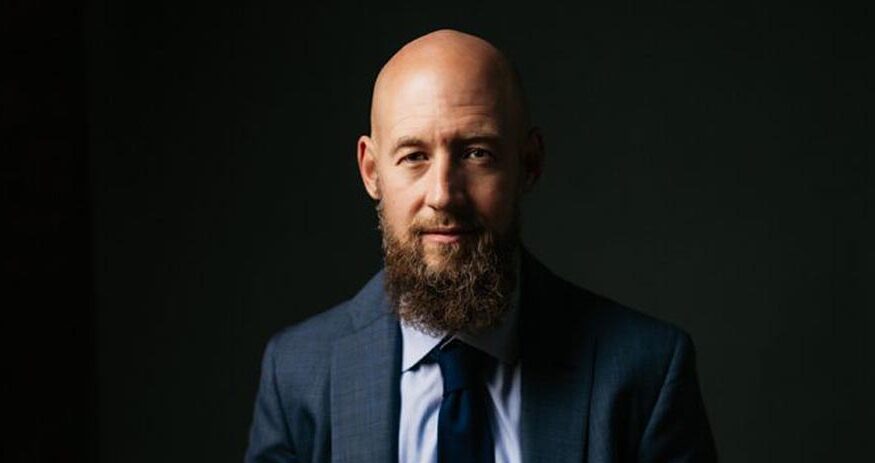
Productivity has become a constant change. A new app appears, a notebook gets christened, and someone announces they’re finally “a systems person,” right before the week fills with disruptions. The version that lasts is purpose, repetition, and learning that compounds. Most weeks test that claim. Russell Nicolet, founder of Nicolet Law, keeps his definition grounded. He says it’s “The ability to work with people that need help in difficult situations, and then be able to actually help them.” That kind of mission can create a productivity shift that emphasizes output rather than performance.

When There’s No Inherited Guide
Nicolet was the first in his family to attend law school.
“A big challenge was just being the first in my family to go to law school and become a lawyer. I didn’t know what to expect, and I didn’t really know how to make it all work. I just went for it, and then did the same when I started my own law office.”
That’s the grind: moving forward without a guarantee that it will feel easy.
Learning That Pays for Itself
He describes his answer to uncertainty as getting better on purpose.
“The big thing I did to overcome these obstacles was just to work at getting more knowledgeable and getting better continuously. Improving my skills, my knowledge, and finding some early mentors in the legal profession that were kind enough to give me a hand.”
It’s repetition and accountability.
Nicolet also names the hours.
“I spen[t] a lot of time as a young attorney doing research in Washington County Law Library to make sure that I effectively handle[d] cases for clients even though I was a brand new attorney.”
That work doesn’t necessarily show up, but it reduces rework later.
Mentorship as a Shortcut to Judgment
Nicolet credits learning from other attorneys, including opponents.
“As a young attorney, I tried to soak up as much as I could from all the attorneys I came across, and really learn from really good attorneys that I had the pleasure of meeting. Sometimes, they were even opposing me.”
Early general litigation broadened Nicolet’s learning pool, injury work narrowed it, and he expanded his training beyond Wisconsin and Minnesota. That’s a productivity shift choice: trade ego for faster learning.
When a Productivity Shift Turns Into a Team Practice
At some point, output is no longer personal. It becomes cultural because a team must make decisions the same way, catch mistakes early, and show up when the work is hard. Nicolet describes that shift through his firm’s growth.
He explains, “I started Nicolet Law as a one-person law office (me) with the goal of helping others. Nicolet Law has now grown to three states and dozens of employees.”
Nicolet adds, “I am proud of the growth, but I am most proud of the excellent folks that work there that come in day after day to fight for the hard-working people and families in the Midwest that need our help.”
On the future of the mission, Nicolet notes, “And we will not stop growing and not stop fighting for those people, because everyone that works here feels and understands that what we do isn’t only a job, but a calling to help, serve, and stand up for those that need it most.”
Keeping the Work Pointed in the Same Direction
Nicolet’s longer view stays aligned with the mission.
“I see myself continuing to represent injured folks in the Midwest and holding insurance companies and large companies accountable for those injuries.”
There are no hacks or heroics. It’s learning, focus, mentorship, and a team that shows up again tomorrow.
Image Credit: Russell Nicolet








Deanna Ritchie
Editor-in-Chief at Calendar. Former Editor-in-Chief, ReadWrite, Former Editor-in-Chief and writer at Startup Grind. Freelance editor at Entrepreneur.com. Deanna loves to help build startups, and guide them to discover the business value and the "how to" of their online content and social media marketing.