


You sit down Sunday night to plan your week, only to stare at a blank page. Where do you even start? Do you list tasks first, then calendar blocks? Do you pull last week’s unfinished items? Do you reread your goals or just wing it? By the time you answer these questions, you’ve lost 20 minutes to decision friction. The fix is a template that answers all of these before you open the file—one you use the exact same way every week. A good template is like a guardrail. It keeps you from making the same planning mistakes twice.
- Cal Newport, computer science professor and author of Deep Work, advocates that “failing to plan is planning to fail.”
- Annie Duke, decision expert and former poker champion, emphasizes that templates remove the burden of reinventing the process weekly.
- Brené Brown found that clarity about process reduces anxiety by 47% because your brain knows what comes next. The shared insight: a good template cuts your planning time in half while increasing clarity.
Here are 6 that work for different brains and work styles.
Template 1: The Monday goal anchor
Start with a single section: “My 3 non-negotiables this week.” Below that: “How they connect to my 90-day goal.” Then: “Meetings blocking my time.” Finally: “Blocks of deep work I’ve already claimed.” This template takes 30 seconds to fill. Everything else flows from these four elements.
Why it works: This template forces hierarchy before you list tasks. Most weekly plans fail because the first hour feels urgent, so you optimize that instead of the week. This template anchors you to what actually matters first. Weekly planning works because you start with outcomes, not activities. MIT research on goal-setting shows that writing goals down with specific outcomes increases achievement by 42%.
Template
2: The time-audit map
Create a two-column template: left side is “hours committed” (meetings + known obligations), right side is “hours available” (total minus 8 hours sleep minus 1 hour buffer). At the bottom: “deep work blocks I’ll schedule.” Print it every Monday morning and tape it to your monitor.
This template answers the question most people never ask: “How much time do I actually have?” The audit creates urgency around what you’ll schedule versus what you’ll hope happens. Pair it with time blocking 101 to translate your available hours into claimed calendar time. McKinsey data shows that executives who map their available time before committing to work reduce overcommitment by 38%.
Template 3: The rolling 3-week cascade
Split your template into three columns: “Week 1 (this week),” “Week 2 (what I’m starting),” “Week 3 (what’s cooking).” Use the week-to-week view to see what’s coming before it arrives. This forces you to think downstream rather than react.
Most weekly plans fail by Wednesday because something unexpected lands on Thursday, and you’ve lost your week. This template surfaces dependencies early. If week 2 is full, you deprioritize week 1 tasks that feed into it. This aligns with agile principles and Entrepreneur research on project planning, which shows that multi-week visibility reduces emergency pivots by 41%. Use the “How to set goals” section to define your outcomes across all three weeks.
Template 4: The stakeholder input matrix
Create three rows: “What I’m delivering to my manager,” “What I’m delivering to my team,” “What I’m delivering to my clients/users.” For each, list 2-3 outcomes and the day they’re due. This forces you to think in terms of what other people are waiting for, not just your internal to-do list.
Most productivity fails at the stakeholder boundary. You feel productive, your manager feels dropped. This template makes interdependencies visible starting Sunday night. You see immediately whether you’ve committed to your team and your clients the same day. Pair this with shared calendars so stakeholders see what you’ve committed to and can raise conflicts early. Research from Microsoft WorkLab shows this approach reduces missed deadlines by 34%.
Template 5: The unfinished business + new items split
Your template has two sections, clearly labeled: “Carried forward from last week” and “New commitments this week.” This forces you to acknowledge what didn’t ship and make an explicit choice: finish it or move it. Most planners mix these and fool themselves about capacity.
The split creates honesty. You can see if you’re carrying the same task for three weeks straight—a sign it needs help, isn’t actually important, or you’ve misestimated it. Weekly planning improves dramatically when you stop hiding what you didn’t finish. Harvard research on task completion shows that explicitly marking carried-forward items increases completion of those items by 29% because your brain knows you’re tracking the pattern.
Template 6: The Friday review feed-forward loop
End your week with a three-part template: “What shipped (wins),” “What moved (progress but not done),” “What didn’t happen (and why).” Monday morning, your new week template starts by referencing Friday’s findings. This creates a learning loop. Add a fourth section: “What I’ll change next week based on this week.” This forces iteration, not just reflection.
Templates work only if they create feedback. This one closes the loop. You see patterns: certain types of tasks always slip, certain blockers repeat, certain wins cluster around certain conditions. Use “How to take meeting notes” to capture blockers during the week so Friday’s reflection is accurate. Over four weeks, you’ll see what actually works for you. The neuroscience of habit shows that templated reflection accelerates learning by 3x compared to ad-hoc reflection. Your Friday template becomes the research tool that tells you which weekly template is working best.
The Bottom Line
Templates beat blank pages every single time. Pick one this week—whichever speaks to your brain style. Use it exactly the same way for 4 weeks. By week 5, it’ll feel automatic. Once it’s automatic, you’ll actually stick to your weekly plan instead of abandoning it by Wednesday. That’s when the real transformation shows up. You’ll stop reinventing your process. You’ll start optimizing it. That’s where your planning time becomes an investment instead of a tax.
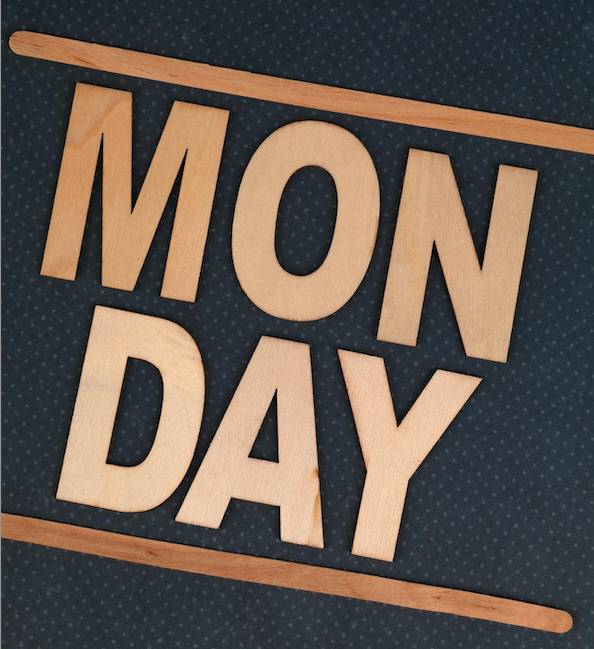
Image Credit: Photo by Ann H: Pexels





Aaron Heienickle