


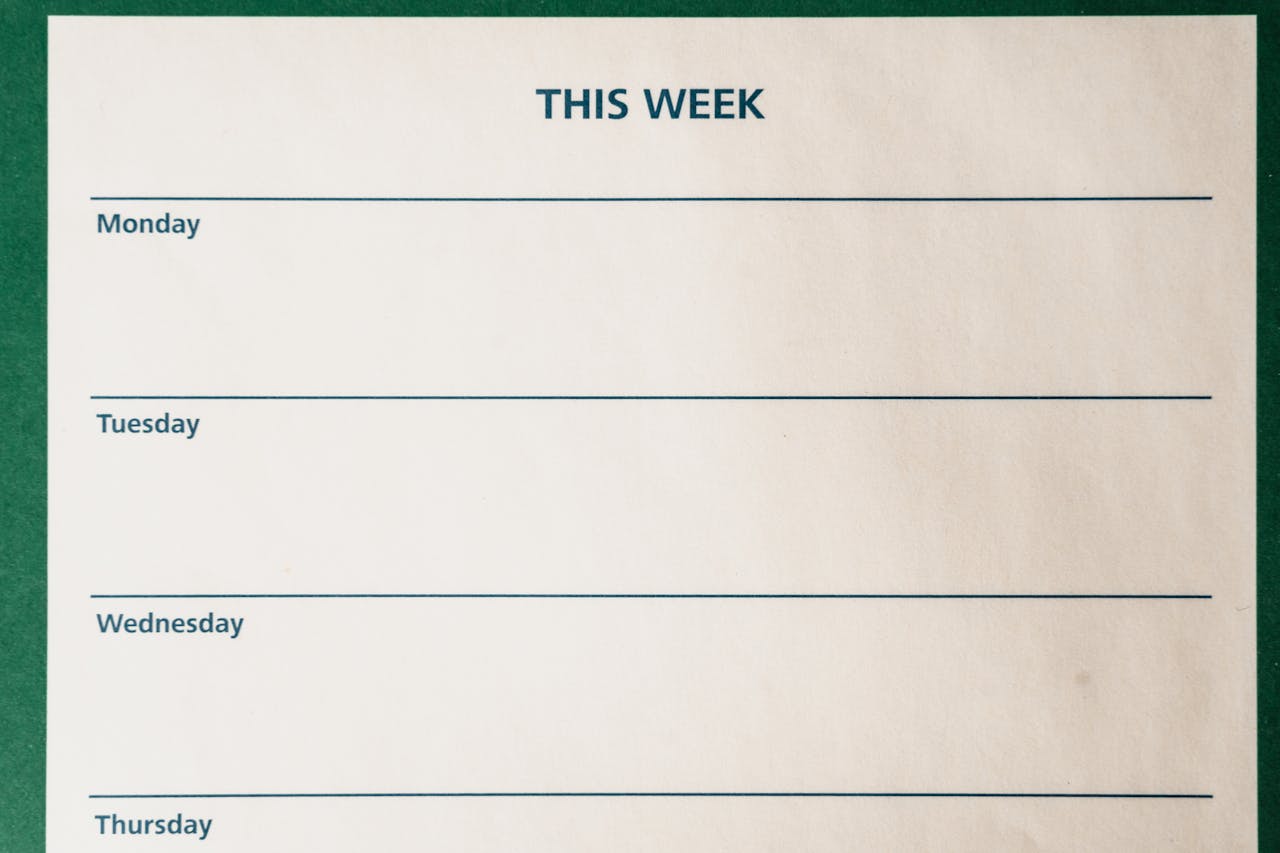
Most weekly reviews are performative. You open your task list, quickly scan it, move a few things around, and tell yourself you have planned the week, and it will be great. Twenty minutes later, you feel organized. By Tuesday afternoon, you feel lost again. The problem is not a lack of review. It is a lack of rigorous guardrails that protect your outline and goals for the week.
A weekly review that actually changes your behavior requires uncomfortable questions, not a comfortable scan. After three years of experimenting with different frameworks, I settled on three prompts that force honesty and produce a plan I can actually follow. They take 15 minutes, and they have been the single most impactful productivity habit I have adopted.
- David Allen, creator of Getting Things Done, calls the weekly review the “critical success factor” of his entire methodology, yet admits that most people skip it or water it down.
- Tiago Forte, author of Building a Second Brain, frames the weekly review differently: it is not about catching up on tasks. It is about recalibrating your relationship with your commitments. The shared insight is that a weekly review is only as good as the questions it asks. The tradeoff is that honest questions produce uncomfortable answers, and most people would rather feel organized than be organized.
Prompt one: What did I say yes to this week that I should have declined?
Pull up your calendar and task list from the past seven days. Look at every meeting you attended, every task you completed, and every request you fulfilled. Ask yourself honestly: which of these tasks did not need to be done by me? This prompt is not about regret. It is about pattern recognition. When you repeatedly identify the types of commitments that consume your time without advancing your priorities, you build the muscle to decline them in real time.
The reason this prompt works is that it shifts the frame from “what did I accomplish this” to “what should I have protected.” Most review frameworks focus on output: what got done and what did not. This prompt focuses on input: what you allowed onto your plate.
- Greg McKeown, author of Essentialism, argues that the disciplined pursuit of less requires saying no to good opportunities in order to say yes to great ones. Your calendar is evidence of how well you are making that distinction. If you find three or more “should have declined” items per week, your filter needs tightening.
A practical tool here is a simple tally. At the end of each review, write down the number of commitments you wish you had declined. Track it over four weeks. If the number is trending down, your judgment is improving. If it is flat or rising, something structural needs to change: a standing rule, an auto-decline setting, or a conversation with whoever is generating most of the requests.
Prompt two: What is the one thing that, if completed next week, makes everything else easier?
This prompt comes from Gary Keller’s The One Thing, and its power lies in its forced singularity. You cannot answer with three things. You must choose one. That constraint forces prioritization that a typical review avoids. When you identify the single highest-leverage task for the coming week, every other decision becomes simpler: does this help me complete the one thing, or does it compete with it?
The temptation is always to pick something urgent instead of something important. Resist it. The one thing that should be the task that creates downstream momentum. Maybe it is finishing a hiring brief that unblocks three other projects. Maybe it is completing the product spec that has been blocking engineering for two weeks. Whatever it is, block time for it on your calendar first, before anything else gets scheduled. The act of blocking it first signals to your brain and your team that this is the priority, not the meetings that arrived in your inbox this morning.
If you struggle to identify the one thing, try this filter: imagine your week ended and you only completed one task. Which single completion would make you feel the week was a success? That is your answer.
- Peter Drucker wrote that the effective executive does first things first and second things not at all. Your weekly review is where you decide what is first.
Prompt three: Where am I lying to myself about progress?
This is the hardest prompt and the most valuable. Look at the projects and goals you are supposedly making progress on. Are you actually moving them forward, or are you doing the easy adjacent work that feels like progress but is not? The client’s proposal has been ‘in progress’ for three weeks. The product launch that is always ‘almost ready.’ The hire you have been ‘actively working on’ but have not sourced a single candidate for. Name the lie, and you can fix it.
Self-deception about progress is the most expensive form of procrastination because it does not feel like procrastination. It feels like work. You are busy, you are putting in effort, and you have tasks checked off. But the actual output that matters, the shipped product, the signed deal, the published article, has not moved.
- Annie Duke, author of Thinking in Bets and Quit, calls this ‘resulting’: judging your actions by their activity rather than their outcomes. The weekly review is your chance to interrupt the cycle.
A concrete tactic: for every project you list as ‘in progress,’ write down the specific output that changed this week. Not the meetings you had about it. Not the research you did. The tangible output. If you cannot name one, the project is stalled, regardless of how busy it makes you feel. That honesty, while uncomfortable, is what makes the review actually useful instead of merely reassuring.
The Bottom Line
A ruthless weekly review is not about being harsh with yourself. It is about being honest. Three prompts, 15 minutes, no sugarcoating. The result is a week that starts with clarity instead of inertia. Try these prompts this Friday. Write your answers down. If the honesty stings a little, that is how you know the review is working. The discomfort is the signal that you are seeing your week clearly enough to actually change how the next one goes.
Image Credit: Photo by MART PRODUCTION: Pexels








Deanna Ritchie
Editor-in-Chief at Calendar. Former Editor-in-Chief, ReadWrite, Editor-in-Chief and writer at Startup Grind. Freelance editor at Entrepreneur.com. Deanna loves to help build startups, and guide them to discover the business value of their online content and social media marketing.