


Your calendar is full, but your decisions are stalled. That is the quiet paradox of most meeting cultures: you spend 15+ hours a week in rooms (or Zoom windows) built for sharing updates that could have been a Slack message or a shared doc. Meanwhile, the choices that actually move projects forward get punted to “let’s circle back.” Research from the Harvard Business Review found that 71% of senior managers consider meetings unproductive and inefficient. The problem is not the meetings themselves. It is the format.
Mamie Kanfer Stewart, founder of Meeteor and author of Momentum, argues that every meeting should have a clear decision-making mechanism assigned before the invite goes out.
Steven Rogelberg, organizational psychologist at UNC Charlotte and author of The Surprising Science of Meetings, reinforces this: meetings improve dramatically when leaders design them around outputs, not inputs. The shared insight is that format is the lever. But the trade-off is real: decision-focused meetings require more upfront preparation, and not every team is ready to let go of the comfortable status-update rhythm.
Replace round-robin updates with a pre-read and a decision queue
Send a one-page brief 24 hours before the meeting and open the session with a single question: what is the decision we need to make? This forces attendees to arrive prepared and shifts the first 10 minutes from recapping old information to debating new options. Teams at Shopify adopted a similar format when they cut recurring meetings by 87% in early 2023, and managers reported faster shipping cycles as a direct result.
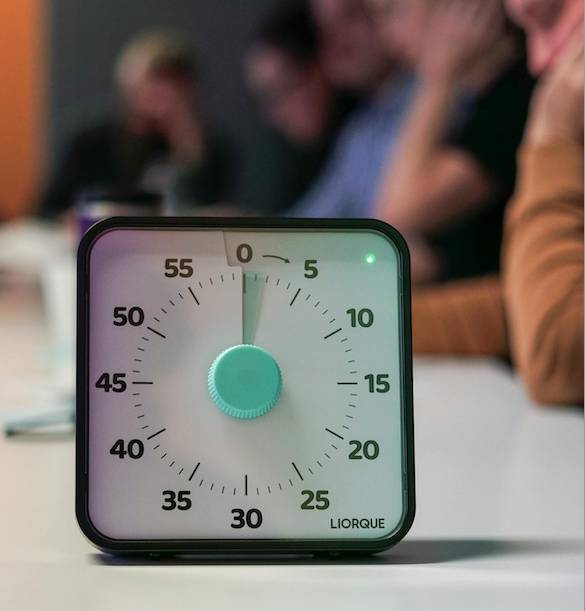
The reasoning is straightforward. When you remove the update portion, you eliminate the passivity that lets people hide behind nodding along. Every minute becomes an active minute. If your team resists dropping updates entirely, try a compromise: cap updates to a total of two minutes using a visible timer, then pivot to the decision queue. You might be surprised how little gets lost in the process.
Assign a decision-maker before you send the calendar invite
Every meeting should have one person designated as the final decision-maker, not a consensus group. Amazon’s single-threaded leadership model applies here: one person owns the outcome. Include their name in the invite description, along with the specific decision they are responsible for. This creates accountability that a vague agenda never will.
Without this clarity, meetings drift into a pattern that Patrick Lencioni calls ‘artificial harmony,’ where everyone nods but nobody commits. Naming the decision-maker does not mean others have no voice. It means there is a clear stopping point. When the discussion is complete, that person calls it. Try this for one sprint cycle. If decisions are not landing faster, you can always revert.
Use a ‘disagree and commit’ closing ritual
In the final two minutes of any decision meeting, go around and ask each person to say either ‘I agree’ or ‘I disagree, but I commit.’ This language, popularized at Amazon and Intel, does something powerful: it separates the decision from personal preference. People who disagree still leave the room aligned on execution, which means you do not relitigate the same issue three days later in a back-channel DM.
This ritual only works if you actually enforce it. That means the facilitator must be willing to pause and ask each person directly. The discomfort is intentional. Research on psychological safety in teams shows that structured disagreement, when done respectfully, actually increases trust over time. People who feel heard, even when overruled, are the ones who execute the hardest.
Timebox debate with a visible countdown
Set a 10-minute timer on screen for the discussion phase and a separate 5-minute timer for the decision phase. When the debate timer expires, the group shifts to a resolution, whether the conversation feels finished or not. This constraint may seem harsh, but it mirrors how effective time-blocking is on your personal calendar: boundaries create focus, and focus creates progress.
Parkinson’s Law tells us that work expands to fill the time allotted. Meetings are no different. A 60-minute meeting will use 60 minutes even if the decision could have been made in 20. By making the clock visible, you implicitly give everyone permission to skip tangents and get to the point. If the timer expires and you genuinely need more time, schedule a follow-up rather than letting the current meeting run into the next.
Document the decision in real time, not after the meeting
Open a shared document during the meeting and type the decision, rationale, and next three actions while the conversation is still ongoing. This is not about creating meeting minutes. It is about creating a commitment artifact that everyone can see before they close their laptops. Claire Hughes Johnson, former COO of Stripe, writes in Scaling People that real-time documentation is one of the highest-leverage habits an operating leader can build.
The practical benefit is the elimination of the telephone game. When decisions are documented after the fact, memories shift, nuance evaporates, and two people walk away with different versions of what was agreed. Writing it live means the decision-maker can read the summary aloud and ask, ‘Does this match what we just decided?’ That 30-second confirmation saves hours of rework downstream.
Kill the standing meeting, replace it with a triggered meeting
Instead of meeting every Tuesday at 10 AM regardless of need, set a trigger: ‘We meet when the decision backlog hits three items or when a blocker is older than 48 hours.’ This approach, sometimes called event-driven scheduling, recognizes that not every week requires the same cadence. A study from Microsoft’s WorkLab found that the number of weekly meetings per person increased by 153% since early 2020, driven largely by standing meetings that had outlived their original purpose.
The trade-off is that triggered meetings require a lightweight system to track the backlog, whether a Slack channel, a Notion board, or a simple shared spreadsheet. But the savings are significant. Teams that move to triggered meetings typically recover two to four hours per week per person. If you are not ready to eliminate the standing meeting entirely, try reducing the frequency from weekly to biweekly and filling the gap with async updates in a shared Calendar workspace.
Cap attendance at five for any meeting that requires a decision
Jeff Bezos’ two-pizza rule gets quoted often enough, but the research backs it up: groups larger than seven struggle with convergence, and decision quality drops measurably once you pass five participants. Before sending the invite, ask yourself whether each person is a decision-maker, a subject-matter expert needed for input, or an observer. Observers get the recording and the decision doc. They do not get a seat.
This feels exclusionary, and that is the hard tradeoff. Some people will want to be in the room. But including them often slows the process without improving the outcome. A study published in the Journal of Applied Psychology showed that adding each person beyond five to a decision-making group reduces effectiveness by roughly 10%. Frame the exclusion as a gift: ‘You are getting your time back, and you will receive the decision within the hour.’
The Bottom Line
Better meetings are not about adding more structure for structure’s sake. They focus on designing the container to meet your desired outcome. Start with one change: name the decision-maker on your next invite and include the specific question the group needs to answer. That single move will do more for your team’s velocity than any new project management tool. Protect your calendar by making every meeting earn its place.
Image credit: Photo, Dimitri; Pexels







Deanna Ritchie
Editor-in-Chief at Calendar. Former Editor-in-Chief, ReadWrite, Former Editor-in-Chief and writer at Startup Grind. Freelance editor at Entrepreneur.com. Deanna loves to help build startups, and guide them to discover the business value and the "how to" of their online content and social media marketing.