


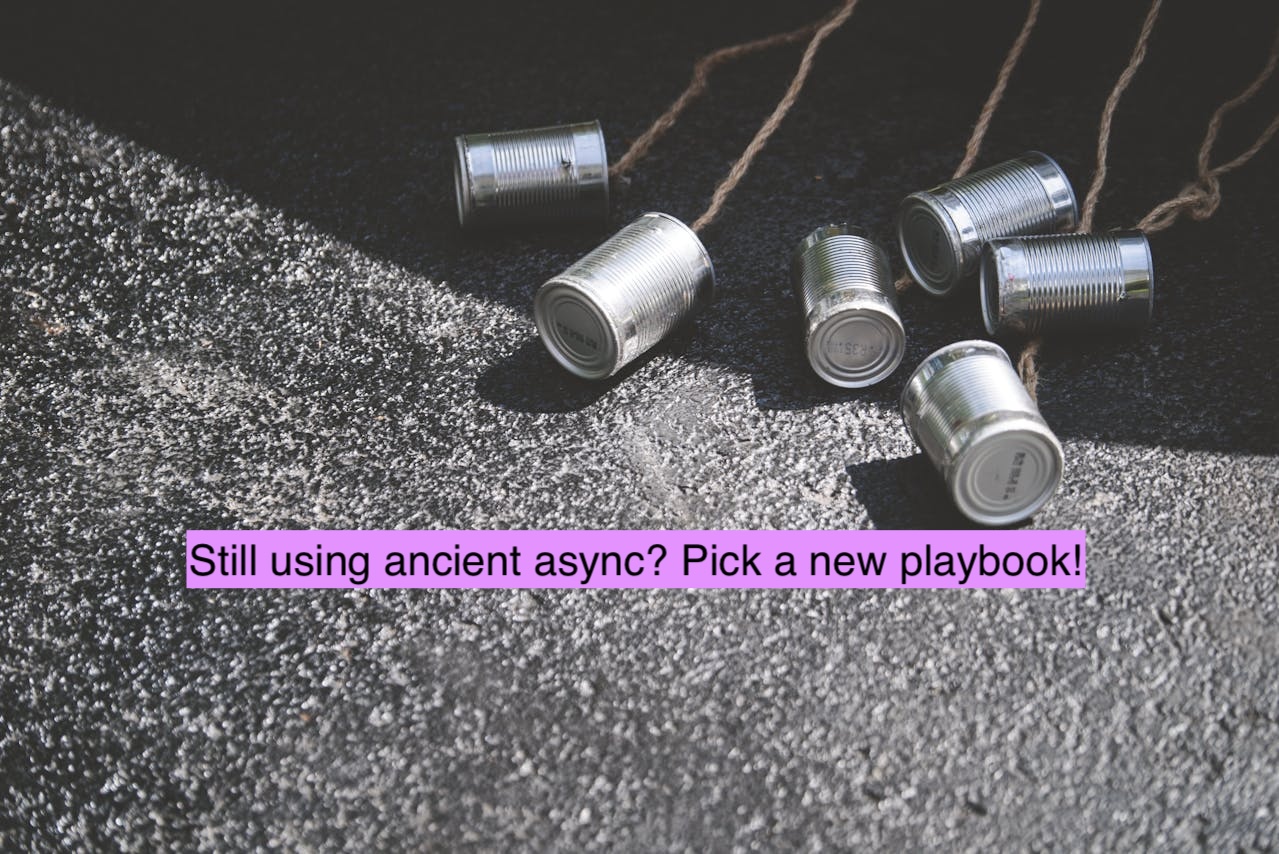
Async communication fails when you pretend it’s just email done differently. Teams ignore async instructions because they’re unclear, take too long with information that they don’t need or use — or are written for some imagined perfect condition that never happens.
The async process is important because it brings together all other processes and communication about your company, projects, and events that don’t occur at the same time for everyone. Strict coordination that allows for time delays between individuals’ actions makes all parts of the whole run smoothly, even when acting separately.
Keeping communication in one place, so all individuals can find it, see it, and add to it as they catch up to finish their part of the project, is essential. Along with flexibility in communication (e.g., email, Slack, ClickUp) and efficiency in computing, systems continue to work while waiting for a response.
Async communication works when you create playbooks: specific templates, clear expectations, and real examples. Then people follow them because they’re designed for how work actually happens, not how you wish it happened.
- Megan McArdle, economist and writer, emphasizes that “clarity beats cleverness.”
- Brené Brown, researcher and author of Dare to Lead, shows that “explicit expectations eliminate resentment.” The tradeoff: you’ll need to document more than you want.
The win: your team will actually use async communication instead of defaulting to “quick sync” meetings that aren’t quick and aren’t actually syncs.
Playbook 1: The daily standup video message (not a meeting)
Instead of a 15-minute daily standup meeting where 3 people talk + 7 people listen, create a daily video message. 2-3 minutes. One person records: Here’s what shipped yesterday. Here’s what’s blocking the project. Here’s what’s on deck today. Done. Everyone watches when it fits their schedule. They reply async in a thread if needed. No meeting. Same information.
This is so much more efficient because all teammates are getting the same data, not theater—no listening to an unending meeting that doesn’t make sense for the specific play one team has to perform. The template: ship, blockers, today’s information. Or: writers, edit, site, delivered, published. Stick to the process of your company’s deliverables. Simple, straightforward instructions and process, describe the constraint and make messages clear. You’re not telling a story. You’re reporting.
Most teams skip this step because they think async standups feel impersonal. Actually, they’re more personal. People get to hear your voice. They see your thinking and your leadership. They don’t have to pretend to pay attention in a meeting camera. They’re listening to instructions or what happened on their commute or during a walk, and will have in mind exactly where they will jump in and do their part of the procedure. The format works because it matches reality, not because it’s emotional.
Playbook 2: The decision document template with an explicit deadline
When you need a decision, you write a decision document — don’t schedule a meeting. Template: What’s the decision? What are the options? Here’s my recommendation + why? What do we need to know? Deadline for feedback: Friday, 5 p.m. That’s it — don’t add a bunch of other stuff. Follow the “Clear, Time-Bound, Executable” principle.
Your workers and teams will read the information on their time. They will add thoughts and other executable information. By Friday, you know what people think and how they are moving forward. No meeting where 3 people talk while 7 people think about their calendars. The document is the communication. The deadline is the rhythm. Use a shared Calendar to send the reminder so people see the deadline.
The magic is the deadline.
Without your deadline, people don’t respond. They bookmark it. They tell themselves they’ll read it later — and they really mean to do it and want to do it, they just don’t. When everyone knows there is always a deadline, they read. They think. They respond. The bounded time creates focus. If you need feedback by Friday, you’re thinking about it Friday morning. If there’s no deadline, it sits until it becomes urgent, and you have to reiterate and decide without input anyway. Deadlines aren’t pressure. They’re clarity.
When everyone has clarity, the stress and pressure go down. Floating thoughts, lax decisions, and deadlines are what really cause pressure to people. Non-specifics are pressure.
Playbook 3: The feedback request with context window
The request “Can you review this?” is useless. “Can you review this design by Wednesday EOD? I’m looking for feedback on whether the landing page copy is clear. Please change the CTA button as well. Context: we’re targeting first-time users who don’t know our product yet.” Now that’s useful.
You’re telling people what you want, when you want it, and why it matters. They can evaluate it in that frame. They know it’s not a full review. You’re not asking them to solve your problem. You’re asking them to check one specific thing. They’ll do it because it’s bound — a bound ask, in a bound project, with a bound timeframe.
The context window works because it treats people’s time as valuable. You’re being specific about what you need. You’re not asking them to guess what matters or guess what the problem is. You state these clearly. When you’re clear, people deliver. When you’re vague, they either spend too much time trying to figure out what you really want, or too little, and either way, they’re frustrated. Clarity compounds. Clear requests get clear responses and clear action.
Playbook 4: The proposal presentation as a recorded walkthrough
Instead of presenting a proposal live to 15 people at 10 a.m., record yourself walking through the proposal process, taking 8-12 minutes. Here’s the problem. Here’s the solution. Here’s why it works. Here’s the timeline and the investment. Done.
People watch when they see it works for them in their sphere. They see your thinking. You’re not performing. You’re communicating. The async version is actually more thoughtful because you’ve scripted it. You’ve practiced. You’re not improvising under pressure. The proposal is clearer because you’re not in a rush. Use the “How-to-set-goals” resource to frame the presentation around outcomes, not just activities.
This is harder than a live meeting. You have to be clear without the advantage of reading the room. That discipline will make you better and better over time. When you rewatch your recording, you notice things, and you’ll ask yourself, “Am I explaining this well?” “Did I skip a step?” “Would they understand the deadline?”
You re-do and iterate, and by the time people are watching it, you’ve already caught issues and shown solutions. The proposal works well because you’ve already thought it through and walked through the process. Those in the room see a clear “how-to.”
Playbook 5: The written meeting debrief within 2 hours
You just had a sync meeting. Don’t let people leave with it being interpreted differently. Within 2 hours, post a debrief: What we decided. What each of us is doing. What’s the deadline? What’s next? One message. Everyone has the same information.
Misunderstandings don’t happen because you’ve clarified. The template: decisions made, action items with owners, timeline, open questions. Use how-to-take-meeting-notes guidance to ensure your debriefs are consumable. You’re not recapping the meeting. You’re clarifying the output.
Most teams skip this, and everyone leaves with different understandings. Then you’re clarifying via email all week. Instead, 20 minutes of writing saves 10 hours of confusion. The debrief becomes the source of truth. When someone asks, “Wait, who’s doing the timeline?” you point them to the debrief. You’re not re-explaining. The thing was explained clearly once.
Playbook 6: The async standup written format (for text-first teams)
Some teams are text-first — and the video standups feel weird to them. You can replace them with written standups: Yesterday shipped / Blockers / Today in a thread. Same structure as the video. Shorter. Faster to read. People reply thread-style. By 10 a.m., everyone has the picture without a meeting.
The constraint is 3-4 sentences per section. That forces clarity. You can’t ramble in a written standup. You’re being precise. That precision actually increases shared understanding because you’re not using 10 minutes of talking to say something that could be 3 sentences.
The written version also creates a record. You can search the record 3 months later. You can see when blockers started. You can see patterns: Is this person blocked frequently? What do we do to unblock them? With video, that data disappears without a follow-up, which some hate to do. With text, it stays. Async communication that’s written provides you with insight into your team’s actual impediments.
Playbook 7: The async retrospective with voting to avoid meeting
Retros are meetings where 12 people talk and 1 person facilitates, and they take 90 minutes to say something that could be documented in 20 minutes. Replace it: Everyone writes what went well, what didn’t, and what’s one thing to change next sprint.
Keep these to 3 minutes each to write. Post them in a shared document. People vote on ideas. Top-voted items become the next sprint focus. Done. Still async, thoughtful, and real. Voting makes you listen rather than negotiate. You’re not debating whose idea matters. Votes decide. That’s democracy in async work.
The retrospective playbook also means new team members can catch up. They can read the past retros. They can see what you’ve learned. They don’t have to sit through 6 months of retros to understand your patterns. The documentation becomes institutional knowledge instead of meeting memories that disappear.
The Bottom Line
Async communication doesn’t fail because it’s async. It fails because the playbooks are unclear. Video standups, decision documents, feedback requests, proposal walkthroughs, meeting debriefs, written standups, and async retros each have templates and expectations.
You can mix these async types to keep people interested. Just remember, when playbooks are clear, people follow them.
When they are clear, your team communicates without constant meetings. You make decisions faster. You move forward because information flows, not because you scheduled a sync. That’s what playbooks enable: asynchronous communication, not just remote meetings with delays.
Image Credit: Stephen Andrews; Pexels



Angela Ruth
My name is Angela Ruth. I aim to help you learn how Calendar can help you manage your time, boost your productivity, and spend your days working on things that matter, both personally and professionally. Here's to improving all your calendars and becoming the person you are destined to become!