


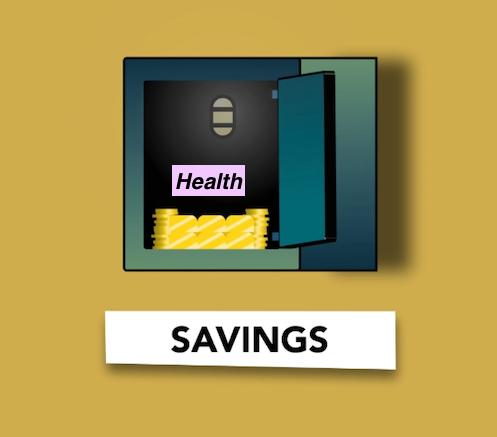
A health savings account (HSA) is a special account for medical expenses that comes with a rare triple tax advantage: your contributions are tax-deductible, your money grows tax-free, and withdrawals for qualified medical costs are tax-free too. That combination makes it arguably the most tax-efficient account available, and yes, for many people it really is the best account they’re not using. The catch is that you need a qualifying high-deductible health plan to contribute.
What most people miss is that an HSA doesn’t have to be spent each year like a flexible spending account. You can invest it and let it grow for decades, which quietly turns it into a stealth retirement account. That single distinction, invest rather than spend, is what separates people who use an HSA well from those who leave most of its value on the table.
Key Takeaways
- Triple tax advantage: deductible contributions, tax-free growth, and tax-free medical withdrawals.
- 2026 limits: $4,400 for self-only coverage and $8,750 for family coverage.
- Catch-up: those 55 and older can add an extra $1,000 per year.
- You need an HDHP: only people with a qualifying high-deductible health plan can contribute.
- It’s not use-it-or-lose-it: HSA funds roll over every year and can be invested.
How the HSA Triple Tax Advantage Works
No other account gives you all three tax breaks at once. According to Fidelity, HSA contributions lower your taxable income now, the balance grows without tax on interest or gains, and withdrawals for qualified medical expenses are completely tax-free. A traditional 401(k) taxes you on withdrawal; a Roth taxes you on the way in. An HSA, used for medical costs, is taxed at neither end.
| 2026 HSA feature | Detail |
|---|---|
| Self-only contribution limit | $4,400 |
| Family contribution limit | $8,750 |
| Catch-up (age 55+) | +$1,000 |
| Contributions | Tax-deductible |
| Growth | Tax-free |
| Qualified medical withdrawals | Tax-free |
“It is health that is real wealth and not pieces of gold and silver.”
— Mahatma Gandhi
The Stealth Retirement Account Strategy
Here’s the move sophisticated savers use. If you can afford to pay current medical bills out of pocket, you can leave your HSA invested and let it compound for decades. After age 65, you can withdraw HSA funds for any purpose (paying ordinary income tax, like a traditional IRA), and medical withdrawals stay tax-free at any age. Some people even save their medical receipts for years and reimburse themselves later, letting the money grow tax-free in the meantime.
A Real-World HSA Example
Consider an illustrative case. Marcus, 35, has a high-deductible health plan and contributes $4,400 a year to his HSA. Rather than spending it on routine copays, he pays those out of pocket and invests the HSA balance in low-cost index funds. He keeps a folder of his medical receipts but doesn’t reimburse himself.
Over 25 years, assuming growth near long-run market averages, that habit could grow into a six-figure balance he can tap tax-free for medical costs in retirement, or reimburse himself for decades of saved receipts. A coworker with the same plan spends her HSA down to zero every year and never builds anything. Same account, wildly different outcomes, driven entirely by whether the money is invested or spent.
Who Should Use an HSA?
An HSA shines if you have a high-deductible health plan and can afford to contribute without needing the money for immediate medical costs. It’s especially powerful for healthy people who rarely visit the doctor, since they can invest and grow the balance. If a high-deductible plan doesn’t fit your health needs, or you’d routinely have to spend the HSA on current bills, the advantages shrink, so it’s not automatically right for everyone.
Frequently Asked Questions
What can I use an HSA for?
HSA funds can be used tax-free for a wide range of qualified medical expenses, including deductibles, copays, prescriptions, dental care, and vision care. After age 65, you can also withdraw for non-medical expenses, paying only ordinary income tax.
Do HSA funds expire at the end of the year?
No. Unlike a flexible spending account (FSA), HSA funds roll over indefinitely and remain yours even if you change jobs or health plans. This is what allows you to invest and grow the balance over time.
Can I invest my HSA?
Yes, many HSA providers let you invest your balance in mutual funds or other options once you hit a minimum threshold. Investing your HSA is how it becomes a long-term, tax-free growth vehicle rather than just a spending account.
What happens to my HSA if I change jobs?
Your HSA is yours to keep. Unlike an FSA, it isn’t tied to your employer, so you take the full balance with you when you change jobs or retire, and you can keep using or investing it as long as you like.
Who is eligible for an HSA?
You must be enrolled in a qualifying high-deductible health plan and not have other disqualifying coverage. You also can’t be enrolled in Medicare or claimed as a dependent on someone else’s tax return.
The Bottom Line
An HSA offers a triple tax advantage no other account matches, with 2026 limits of $4,400 for individuals and $8,750 for families. If you have a qualifying high-deductible health plan, it can serve as both a medical safety net and a stealth retirement account. For eligible savers, maxing an HSA and investing it may be one of the smartest, most overlooked money moves available.
Image Credit: Gabby K Monstera Production; Pexels







Deanna Ritchie
Editor-in-Chief at Calendar. Former Editor-in-Chief, ReadWrite, Former Editor-in-Chief and writer at Startup Grind. Freelance editor at Entrepreneur.com. Deanna loves to help build startups, and guide them to discover their business value and the "how to" of their online content and social media marketing.